Connect with us

Fitness & Exercise

Advanced Strategies for Beginner Workouts to Add to Your Routine

Published

on

Starting a fitness journey can often feel overwhelming, particularly with the multitude of workout routines, exercise styles, and fitness trends available today. Beginners may find themselves unsure of where to begin or how to progress effectively. While many might initially gravitate towards basic exercises — walking, light weightlifting, or simple bodyweight movements — there comes a point when the body needs more than just the basics to continue improving. This is where advanced strategies come in. For beginners, the term “advanced” can sound intimidating, but with the right approach, even those new to exercise can integrate sophisticated techniques to boost progress and achieve their goals more efficiently. In this article, we will explore several advanced strategies for beginner workouts that, when applied properly, can enhance results, prevent plateaus, and ultimately accelerate progress.

1. Progressive Overload: The Cornerstone of Growth

One of the most powerful and widely used advanced strategies is progressive overload, which simply means gradually increasing the intensity of your workouts over time to force your body to adapt and grow stronger. For beginners, this strategy can seem daunting, as it’s easy to think of it as something reserved for seasoned athletes. However, progressive overload can and should be implemented from the very start of your fitness journey.

The principle of progressive overload can be applied in several ways:

  • Increasing resistance: If you’re lifting weights, aim to gradually add more weight to the barbell or dumbbell. Even small increments of 2.5 to 5 pounds can make a significant difference over time.

  • Increasing repetitions: If you’re using bodyweight exercises such as push-ups, squats, or lunges, gradually add more reps to each set.

  • Increasing sets: Adding another set to an exercise can help increase volume and, subsequently, muscle endurance.

  • Reducing rest time: By shortening the rest periods between sets, you can challenge your cardiovascular system and increase the intensity of your workouts.

For beginners, starting with manageable increments — for example, adding one extra rep or one set per week — ensures that the body has enough time to adapt without risking injury or overtraining.

2. Circuit Training: Maximizing Efficiency

Circuit training is an excellent strategy for beginners looking to build strength and improve cardiovascular fitness simultaneously. This method involves performing a series of exercises in succession with minimal rest in between. The combination of different movements—targeting various muscle groups—creates a full-body workout in a relatively short period.

For beginners, circuit training offers several advantages:

  • Time Efficiency: Circuit training can be completed in as little as 30 minutes, making it ideal for those with busy schedules.

  • Increased Caloric Burn: By combining strength and cardio, you elevate your heart rate and burn more calories compared to traditional weightlifting or steady-state cardio.

  • Versatility: You can tailor circuits to any fitness level by adjusting the exercises, sets, or intensity. Beginner circuits might include bodyweight exercises like squats, push-ups, and lunges, while more advanced versions could incorporate free weights or resistance bands.

For beginners, an example circuit might look like this:

  • 30 seconds of squats

  • 30 seconds of push-ups

  • 30 seconds of mountain climbers

  • 30 seconds of plank hold

  • Repeat for 3-4 rounds, with 1-minute rest in between.

This type of training not only challenges the muscles but also keeps the heart rate elevated, making it a great tool for overall fitness improvement.

3. Superset Training: Increasing Intensity Without Extra Time

Another strategy to elevate your workouts as a beginner is the use of superset training. Supersetting involves performing two exercises back-to-back with no rest in between. These exercises typically target different muscle groups, either working opposing muscles (antagonistic supersets, such as bicep curls and triceps dips) or the same muscle group (compound supersets, such as squats and lunges).

Why add supersets to your routine?

  • Time-Efficient: By reducing the rest between exercises, you can complete a greater volume of work in less time, leading to faster gains.

  • Muscle Endurance: Supersetting exercises helps build endurance by increasing the amount of time muscles spend under tension.

  • Variety: Supersets add variety to your workouts, preventing monotony and ensuring that all muscle groups are effectively targeted.

For beginners, a simple superset might involve pairing an upper-body exercise with a lower-body exercise, such as:

  • Set 1: Push-ups (10-15 reps) + Bodyweight Squats (15-20 reps)

  • Set 2: Dumbbell Rows (8-12 reps) + Walking Lunges (10-12 reps per leg)

  • Repeat for 3-4 sets, with 30 seconds of rest after each superset.

Supersetting allows beginners to progressively challenge their muscles without increasing workout duration.

4. Active Rest: Maintaining Intensity While Recovering

Incorporating active rest periods into your workout can enhance overall training intensity and help beginners push through their routines without sacrificing quality. Instead of standing still or sitting during rest periods, perform a low-intensity movement like jogging in place, jump rope, or bodyweight exercises like glute bridges or air squats.

This strategy has multiple benefits:

  • Keeps the Heart Rate Elevated: Active rest helps maintain an elevated heart rate, increasing calorie burn and cardiovascular benefits.

  • Improves Conditioning: By incorporating low-intensity movements, you train your body to recover faster, enhancing endurance over time.

  • Mental Focus: Continuous movement prevents the workout from feeling stagnant, keeping motivation high.

For example, during a full-body workout, rather than resting entirely between sets, you might choose to do 30 seconds of jump rope or shadowboxing before your next set of strength training exercises. This strategy will help you work on both strength and conditioning in the same session.

5. Tempo Training: Focusing on Form and Muscle Engagement

Tempo training is an advanced method that focuses on the speed at which you perform each phase of a movement (the concentric, isometric, and eccentric phases). For beginners, this technique can be extremely beneficial in terms of form, muscle engagement, and control, ensuring that each movement is performed with precision.

In a typical lift, such as a squat, the eccentric phase is when you lower the weight (or your body), the concentric phase is when you lift the weight, and the isometric phase occurs when you pause at the peak of the movement. By manipulating the tempo, you can slow down these phases to increase muscle time under tension, forcing your muscles to work harder.

For example:

  • Slow down the eccentric phase (lowering the weight) to a 3-4 second count, then perform a controlled lift (1-2 seconds).

  • Pause for a 1-second hold at the bottom of the movement before rising back up.

This technique enhances strength, muscle growth, and mind-muscle connection. It encourages beginners to focus more on control and precision, rather than rushing through movements.

6. Tracking and Monitoring Progress

Lastly, one of the most advanced yet critical strategies for beginners is tracking and monitoring progress. It’s easy to lose sight of small improvements when you’re starting, but tracking various aspects of your fitness routine allows you to see progress over time, ensuring that you’re consistently working towards your goals.

Tracking can be done in several ways:

  • Strength gains: Note the weights you’re lifting or the number of reps you’re completing for each exercise.

  • Cardiovascular improvements: Keep track of how long you can sustain a particular pace or intensity during cardio workouts.

  • Body measurements: Track your weight, body fat percentage, or muscle measurements to assess physical changes.

  • Energy levels: Pay attention to how your energy levels evolve over time, particularly in relation to workout intensity.

Using fitness apps, journals, or wearables can help keep track of these variables, providing a concrete picture of your progression and highlighting areas that need attention.

Conclusion

As a beginner, adopting advanced training strategies doesn’t mean diving into complex or intense exercises right away. Rather, it’s about enhancing your existing routine in a way that challenges your body, improves your overall fitness, and accelerates progress. By incorporating principles such as progressive overload, circuit training, supersets, active rest, tempo training, and consistent progress tracking, beginners can quickly build a solid foundation for growth. These strategies provide not only a boost in motivation but also ensure that every workout is an opportunity to get stronger, more resilient, and closer to your fitness goals.

Continue Reading

Fitness & Exercise

Why Science Backed Group Training Helps Improve Strength, Stamina and Consistency
Published

on

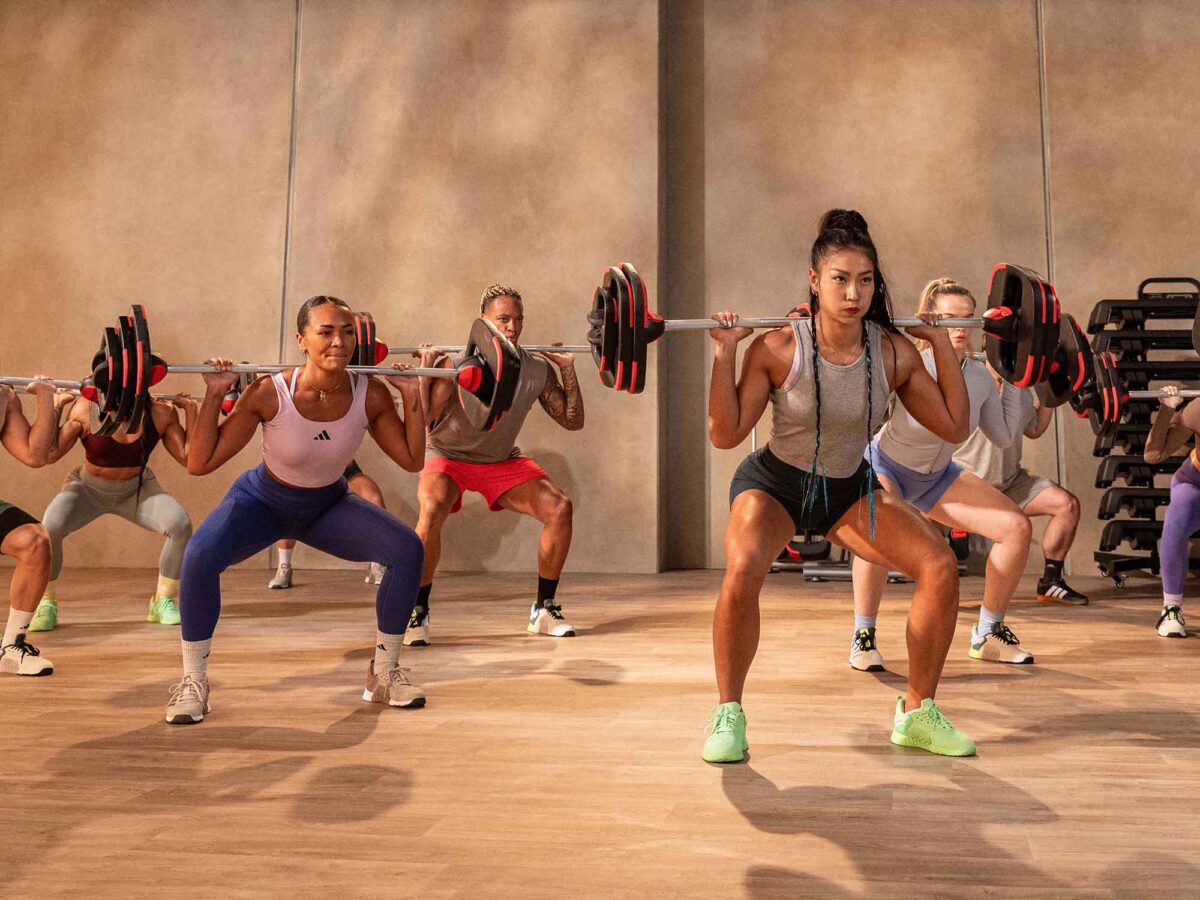
Many people want fitness results, but they struggle to follow a programme that is structured, progressive and motivating. Random workouts may feel productive in the moment, but they do not always create long term improvement. The body needs planned challenge, proper recovery and consistency. This is where science backed group training becomes valuable.

For people exploring les mills singapore, the appeal is not only high energy music or group motivation. The real value comes from structured programming that combines movement, coaching and intensity in a planned format. This helps participants improve strength, stamina and exercise discipline without needing to design every workout themselves.

Structured training removes guesswork

One of the biggest problems with self directed workouts is uncertainty. People may not know which exercises to choose, how hard to train or how to progress safely. This can lead to repeated routines, poor balance or inconsistent effort.

Science backed group training provides a clear session structure. Participants follow a planned format with warm ups, strength or conditioning blocks, intensity changes and cooldowns. This allows them to train with purpose instead of guessing.

When workouts are structured, people are more likely to complete sessions properly and return consistently.

Strength and stamina work together

A good group training format does not only focus on one fitness quality. Strength and stamina often support each other. Stronger muscles help the body move with more control, while better stamina allows people to sustain effort longer.

High intensity group sessions may include bodyweight exercises, resistance based movements, cardio drills and athletic style conditioning. Together, these elements challenge both muscular and cardiovascular systems.

This combination is useful for adults who want practical fitness, not just one isolated result.

Coaching improves exercise quality

Instructor guidance is a major advantage of group training. Participants receive cues about posture, pace, effort and modifications. This can improve exercise quality, especially for people who are unsure how hard to push or how to move safely.

Good coaching also helps participants manage intensity. High effort training should feel challenging, but it should not become uncontrolled. Instructors help create that balance by guiding movement and energy.

This support makes group training more accessible and effective.

Group energy supports motivation

Motivation changes from day to day. Some people arrive at class feeling tired or distracted. Group energy can help them stay engaged. Music, coaching and shared effort create an atmosphere that encourages participation.

The group does not need to feel competitive. It can simply provide momentum. Seeing others push through the same session can help participants keep going.

A fitness environment such as True Fitness Singapore can support this through structured class settings where energy, coaching and programming work together.

Consistency creates results

One class can feel rewarding, but real improvement comes from repeated participation. Science backed training helps consistency because the format is engaging and purposeful. Participants know what to expect, but the structure still provides challenge.

When people enjoy the class and trust the programming, they are more likely to keep attending. This repeated exposure builds stamina, strength, coordination and confidence over time.

Consistency is the real engine behind fitness progress.

Recovery remains essential

High intensity group training can be demanding. Participants should balance harder sessions with recovery, sleep, hydration and suitable nutrition. More intensity is not always better.

A smart weekly routine may include one or two high intensity sessions, strength training, mobility work and rest days. This prevents burnout and helps the body adapt.

Recovery is not a weakness. It is what allows training to become sustainable.

FAQ

I am interested in structured group training but worry it may be too intense. Should I try it?

Yes, if you start at a level you can manage. Use modifications, reduce speed when needed and focus on form first. Intensity can increase as confidence and fitness improve.

Can group training replace my normal gym routine?

It can be part of your routine, but a balanced plan may also include strength training, mobility and recovery. The right mix depends on your goals.

I get bored with regular gym workouts. Would this type of class help?

Yes. Structured group training can feel more engaging because of coaching, music and varied movement. It removes the boredom of repeating the same solo routine.

How often should I attend high intensity group classes?

Many people start with one or two sessions per week. Increase only if your recovery, sleep and energy remain strong.

Conclusion

Science backed group training helps improve strength, stamina and consistency by giving participants structure, coaching and motivation. It removes guesswork while still allowing people to train with energy and purpose.

For adults in Singapore, this type of training can be a powerful way to make fitness more focused and sustainable. When smart programming meets consistent effort, results become easier to build.

Continue Reading

Trending

© 2026 Healthy Youth - All Rights Reserved.